Introduction: Why These Speeches Matter More Than News Headlines
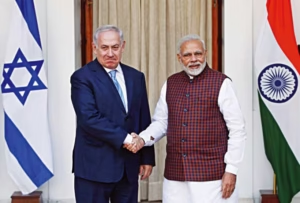
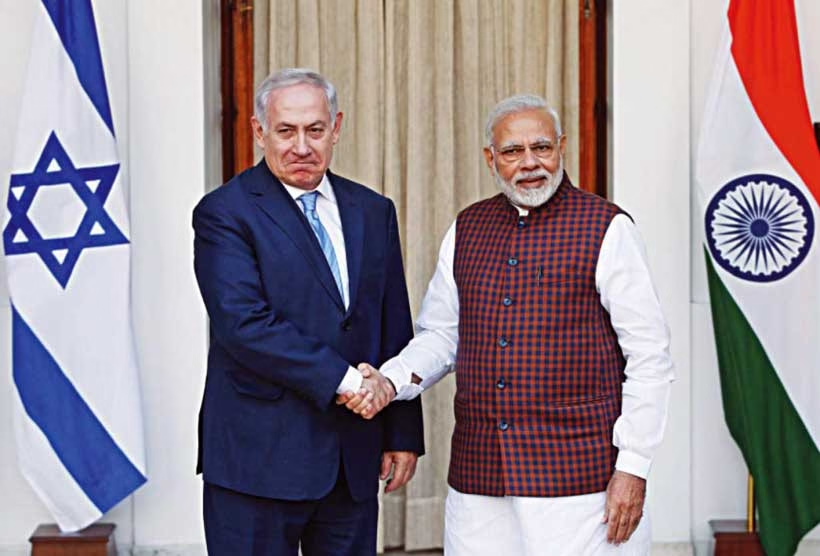
Have you ever seen two world leaders who look less like “politicians” and more like long-lost brothers? If you watched the live broadcast from the Knesset (Israel’s Parliament) in February 2026, you know exactly what I’m talking about.
India-Israel relations in 2026 extend beyond mere defense agreements and high-tech collaborations to encompass a profound political, emotional, and civilizational bond. This connection has been underscored by the recent speeches of Prime Minister Narendra Modi and Prime Minister Benjamin Netanyahu in the Knesset, Israel’s parliament. Their addresses conveyed clear messages not only to each other and their respective populations but also to the international community, highlighting the depth and significance of the partnership between the two nations.
In this article, I aim to translate Netanyahu’s Hebrew speech into simple English and connect it to both countries relations in 2026. My goal is to make the content value-driven and thought-provoking, helping you understand the speech’s implications for India’s future, our foreign policy, and our perspective on global politics.
Feature Breakdown
Section 1: Setting the Stage – Modi at the Knesset in 2026
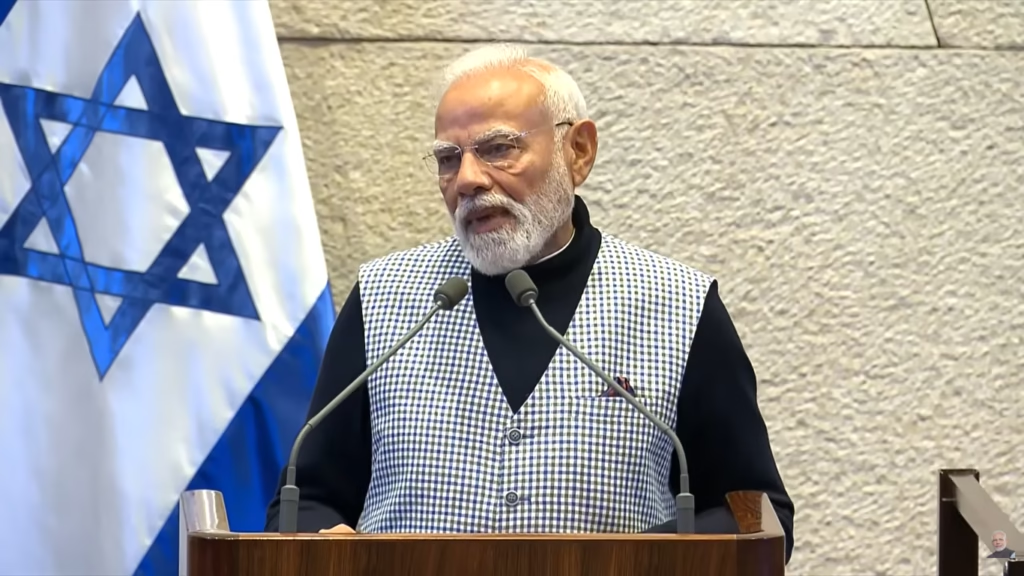
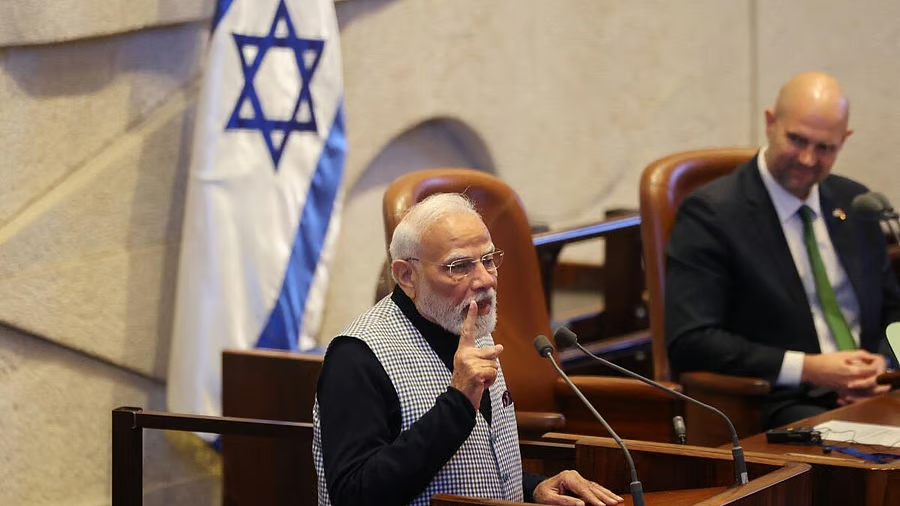
In February 2026, Prime Minister Narendra Modi spoke to the Knesset. He became the first Indian Prime Minister to do this. This visit was his second trip to Israel; the first was in 2017. That visit had already changed many old views in India’s policy toward Israel.
In February 2026, Prime Minister Narendra Modi spoke at the Knesset, making him the first Indian Prime Minister to do so. This visit was part of his second official trip to Israel. His first visit was in 2017 and had already changed many old concerns about India’s relationship with Israel.
But the emotional core of the event came when Netanyahu spoke – partly in English, partly in Hebrew – and that is what we will decode now.
Section 2: Netanyahu’s Hebrew Speech – Simple English Sense
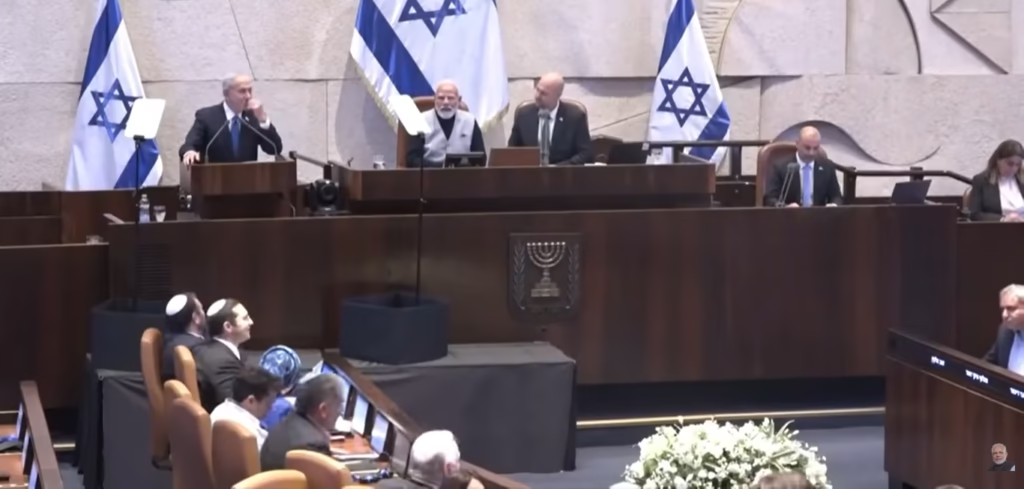
Netanyahu’s speech combines personal feelings, historical references, strategic messages, and cultural elements. I will explain what he is really saying in straightforward, easy-to-understand English, without translating the speech word for word.
2.1. “My dear friend… more than a friend, a brother”
Israeli Prime Minister Benjamin Netanyahu has expressed a deep personal bond with Indian Prime Minister Narendra Modi, describing their relationship as that of not just friends, but almost like brothers. He reflected on their past visit to the Mediterranean coast, where they had the opportunity to walk along the water and strengthen their connection. Netanyahu highlighted the significance of the well-known “Modi hug,” emphasizing that it goes beyond mere protocol to represent genuine warmth and trust between their two leaderships and the peoples they represent.
Real meaning: Netanyahu is trying to show that the India–Israel relationship is not cold diplomacy; it is a heartfelt partnership based on trust, comfort and emotional connection at the top level.
2.2. “India is a gigantic power… Israel is also gigantic”
Netanyahu calls India a “gigantic power” with nearly one and a half billion people. He also describes Israel as “gigantic” in terms of spirit, innovation, and its ability to perform “miracles.” He states that the alliance between India and Israel enhances both countries’ strengths, spirit, and capabilities.
Real meaning: He is telling the world that when a population giant (India) joins hands with a tech‑innovation giant (Israel), their combined power becomes much bigger than their individual capacities. This is an indirect message to other global powers that the India–Israel partnership is strategic and long‑term.
2.3. “Two ancient civilizations – Indus Valley and Jordan Valley”
Netanyahu draws a fascinating comparison between the Indus Valley and the Jordan Valley, highlighting them as two of the great birthplaces of human civilization. He notes that these regions have been at the heart of developing spirituality, morality, and innovative ideas. It’s interesting to remember that both countries faced long struggles, finally gaining their independence from British rule around the same time, nearly 80 years ago.
Real meaning: He is placing India and Israel in the same “civilizational league”, not just as modern states but as ancient cultures that survived history’s tests. This appeals strongly to India’s self‑image as a civilizational state and fits well with Modi’s usual narrative of ancient Indian heritage.
2.4. “We never forget what India did for us”
In his speech, Netanyahu talks about important events in history, like World War I, when Indian soldiers fought and died in battles such as Haifa for the freedom of this area. He remembers that these soldiers gave their lives in this land. Netanyahu also notes that India has always welcomed Jews and never persecuted them. He thanks India for its support of Israel during tough times, including recent conflicts.
Real meaning: He is telling Israeli citizens and the world: India is not a new friend; India has been with us in our darkest hours, both historically and today, so this partnership is deeply rooted and trustworthy.
2.5. “Hope – from Hatikvah to Asha”
The Knesset Speaker links Israel’s national anthem “Hatikvah” (The Hope) to the Hindi word “Asha,” which also means hope. He mentions that Modi has called the relationship between India and Israel a partnership of hope. Netanyahu supports this idea of hope, stating that India stood with Israel “for the truth.” He expresses that the people of Israel greatly admire Modi’s leadership and appreciate that he visited during Israel’s difficult times.
Real meaning: The message is that India–Israel relations are not just interest‑based; they are value‑based, built on shared hope, mutual support and moral alignment against terrorism and extremism.
Section 3: Modi’s Core Messages – Terror, Peace and Civilizational Bond
To understand the full picture, we have to see how Modi’s speech connects with Netanyahu’s. A few lines from Modi’s address stand out.
3.1. Clear stand against terrorism
Modi strongly condemns the Hamas attacks on October 7, calling them “barbaric.” He expresses deep condolences for everyone who lost their lives and for families that were affected. He reminds the Knesset that India has also faced terrorism, referencing the 26/11 Mumbai attacks. Modi emphasizes that India has a clear policy of zero tolerance for terrorism, with no double standards.
Actionable insight for readers:
As Indians, we should understand how our experience with terrorism shapes our foreign policy. When we see India standing firmly with Israel against terror, it is also a signal to the world that India expects similar clarity when it faces attacks.
3.2. Support for durable peace and Palestinian question
Modi talks about initiatives like the Gaza peace plan, which the UN Security Council supports. He states that India backs efforts to achieve a fair and lasting peace in the region, including addressing the Palestinian issue. He notes that the path to peace is challenging, but India believes in dialogue, peace, and stability.
Real meaning: India is balancing two things: strong support for Israel’s security and clear condemnation of terrorism, along with support for a fair solution for Palestinians and long‑term regional stability.
3.3. Pride in India’s record with the Jewish community
Modi proudly shares that Jewish communities in India, such as the Bene Israel in Maharashtra, Cochini Jews in Kerala, Baghdadi Jews in Kolkata and Mumbai, and Bnei Menashe in the Northeast, have lived peacefully without persecution. They have actively participated in Indian society. Modi highlights the contributions of individual Jews in various fields, including the arts and military. He also mentions Indian-origin Jews in Israel, who consider Israel their fatherland and India their motherland.
Real meaning: India is projecting itself as a civilizational culture of tolerance and inclusion, strengthening its moral image while deepening emotional ties with Israel.
Section 4: What This Means for India–Israel Relations in 2026
Now let’s translate all this into practical, real‑world implications for 2026 and beyond.
4.1. Defence and security partnership will deepen
Both speeches highlight concerns about terrorism, security, and trust. This suggests that cooperation will likely grow in areas like sharing intelligence, cyber security, drone technology, missile defense (such as Iron Dome), and joint research and development in the coming years.
Actionable takeaway:
Students, tech enthusiasts, and entrepreneurs can find many career and startup opportunities in fields like defense technology, cybersecurity, AI-based surveillance, and drone technology. The collaboration between India and Israel in these areas is likely to drive innovation and create growth opportunities in these exciting sectors.
4.2. Technology, agriculture and water will stay central
Netanyahu proudly describes Israel as a nation that performs miracles, while Modi highlights Israel’s achievements and India’s own startup scene, which has over 200,000 startups. Existing agreements cover agriculture, water management, innovation, and industrial research and development. This friendly political relationship makes it easier to expand these programs.
Actionable takeaway:
If you are from an agriculture background or a startup founder, watch for Indo‑Israeli centres of excellence in farming, water technology and precision agriculture – these can be powerful case studies and collaboration points.
4.3. Symbolic gestures matter in foreign policy
The Knesset building was lit up in Indian colors, and the “Modi hug” happened. Children waved Indian and Israeli flags, and there were many mentions of shared festivals like Purim and Holi. These actions send a strong message that goes beyond just policy papers. They create a positive atmosphere, making it easier to sign important agreements, even if they are sensitive.
Actionable takeaway:
When analyzing international relations—whether for blogging, exams, or business decisions—it’s essential to consider the role of symbolism. Elements such as photographs, phrases, and ceremonies can provide valuable insights into the confidence and future orientation of partnerships. These symbolic gestures often reflect the underlying dynamics and mutual intentions of the parties involved.
4.4. India’s global positioning
Modi is being recognized as a significant leader of our time and a key partner. This not only strengthens the ties between India and Israel but also positions India as an important, value-driven global player. India can engage with different sides, even on sensitive issues like Palestine. This kind of soft power and political influence will help India in future negotiations, alliances, and leadership roles on the global stage.
Final Thoughts & Your Opinion
As of 2026, India and Israel maintain a robust bilateral relationship characterized by significant collaboration in security, advancements in technology, and a mutual appreciation of each other’s cultural heritage. Israeli Prime Minister Benjamin Netanyahu referred to India as a “brother nation” during his speech to the Knesset, emphasizing the long-standing partnership and support that India has provided to Israel in challenging times.
Indian Prime Minister Narendra Modi, in his address, portrayed India as a tolerant and democratic nation with an ancient civilization, committed to combating terrorism and fostering peace. This partnership reflects deep emotional connections and shared values between the two countries.
If you are searching for “India–Israel relations 2026”, “Modi Netanyahu Knesset speech meaning”, or “Netanyahu Hebrew speech translation in English”, I hope this article helped you understand the human, emotional and strategic layers behind those powerful lines.
Now I genuinely want to hear from you:
- Do you think India should go even closer to Israel, or maintain more distance to balance relations with the Arab world?
- Which part of Netanyahu’s or Modi’s speech impressed you the most, and why?
- As a student, professional or entrepreneur, do you see any opportunity for yourself in this growing partnership?
👉 Also read my article on Mindfulness in Financial Decisions to understand how global news and emotions affect our money choices: https://sparksphere.co.in/mindfulness-financial-decisions/
Share your honest feedback and opinions in the comments. Your thoughts can help shape more grounded, people‑centric discussions on foreign policy – not just slogans and headlines.