

Money affects almost every part of our lives, from our peace of mind and lifestyle to our family’s security and our long-term goals. Still, many people find it hard to make good financial choices. We often buy things we don’t need, take on loans we can’t really afford, put off saving, and sometimes make mistakes that hurt us financially for a long time.
But here is the truth…
Most bad financial decisions are not because we are “bad with money.”
They happen because of how the human brain is wired.
Yes—our psychology (our emotions, habits, fears, and mindset) influences our financial choices far more than we realize.
In this blog, just like you, someone who has also made financial mistakes and learned from them. My intention is not to judge anyone, but to help you understand the psychological reasons behind poor money choices—so you can avoid them and secure a better future.
Let’s dive deeper.
Feature Breakdown
1. Why Do We Make Bad Financial Decisions? The Real Psychological Reasons
1.1. Instant Gratification – “I Want It Now!”
People tend to pick immediate pleasure instead of waiting for future rewards.
This is called Instant Gratification Bias.
You experience this when you:
- Buy a new phone even though your current one works fine
- Order food instead of cooking
- Spend on weekend partying instead of saving
- Swipe your credit card and think “I’ll manage later”
Our brain releases dopamine (the feel-good chemical) when we buy something. This feels rewarding in the moment, but financially damaging in the long run.
This is why learning to stay present and conscious in the moment is so important. If you struggle with impulsive decisions, you may find value in reading The Power of Now: A Simple Guide to Living, which explains how awareness in the present moment helps us pause, think clearly, and make better life choices—including financial ones.
Solution:
Before making big purchases, pause for 24 hours. This “cooling-off” period reduces emotional buying by more than 60%.
1.2. Social Pressure – “Everyone Has It, I Should Too”

We compare ourselves to others constantly—neighbors, friends, relatives, social media influencers.
- Your friend buys a car → you feel you also need one
- A cousin purchases an iPhone → your Android feels “cheap”
- Instagram shows luxury lifestyles → you feel you’re behind
This is called Social Comparison Bias, and sadly, it pushes thousands of people into unnecessary EMI burdens.
Solution:
Ask yourself: If nobody could see what I am buying, would I still buy it?
If the answer is no, don’t buy it.
1.3. Overconfidence – “I Can Handle It, It Won’t Happen to Me”
Many people believe:
- “I can quickly repay this loan”
- “My business will definitely grow”
- “I will start saving from next month”
- “I can control my spending anytime”
This overconfidence leads to risky investments, overspending, and ignoring financial planning.
Solution:
Always plan based on reality—not hope.
Prepare for worst-case scenarios too.
1.4. Emotional Spending – Buying to Feel Better

When we feel:
- sad
- stressed
- angry
- lonely
- bored
…we often buy things to change our mood.
This is called Emotional Spending.
But the problem is—your mood changes, but the money is gone forever.
Solution:
Before buying something, ask yourself:
“Do I need this, or am I trying to feel better?”
If it’s emotional, delay the purchase.
1.5. Fear of Missing Out (FOMO) – “Limited Offer! Last Day!”
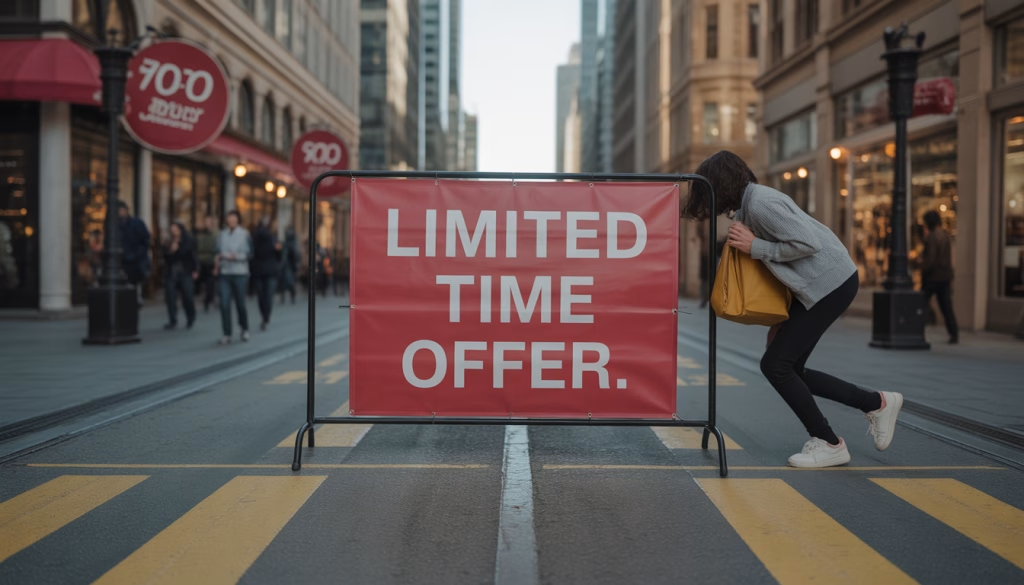
Sales, discounts, limited-time offers, crypto hype, trending investments—these trigger FOMO.
Marketing companies know this very well.
You feel:
- If I don’t buy now, I’ll regret later
- If I don’t invest, I’ll miss the opportunity
- If I don’t join, I’ll fall behind others
Solution:
If a decision must be made immediately, it is usually not a good financial decision.
1.6. Lack of Financial Literacy
Most people were never taught:
- how to save
- how to budget
- how to invest
- how to avoid debt
- how to identify scams
Without financial education, even smart people make poor choices.
Solution:
Read, listen, learn—financial education is the best investment.
1.7. Optimism Bias – “Everything Will Be Fine”
Many people don’t save emergency funds because they believe nothing bad will happen.
But life is unpredictable.
This bias leads to:
- zero savings
- taking too many loans
- ignoring insurance
- depending on future income
Solution:
Create an emergency fund equal to 3–6 months of expenses.
2. How to Stop Making Bad Financial Decisions: Actionable Steps You Can Start Today

Here are practical steps you can apply immediately:
2.1. Follow the 50-30-20 Rule
Divide your income as:
- 50% → needs
- 30% → wants
- 20% → savings & investments
Even starting with 10% builds discipline.
2.2. The 24-Hour Rule
Before buying anything above $100, wait 24 hours.
Most impulsive desires fade with time.
2.3. Tracking Expenses
Just tracking expenses helps reduce overspending by 20–30%.
Use:
- Google Sheets
- Notebooks
- Money manager apps
Small awareness leads to big changes.
2.4. Small Expenses – The Silent Money Killer
Small expenses add up fast:
- daily snacks
- random shopping
- impulsive online purchases
Cutting these can save thousands per month.
2.5. Invest Automatically
Set up automatic transfers from your bank to:
- SIPs
- Recurring deposits
- Savings accounts
When savings happen automatically, you don’t rely on willpower.
2.6. Unsubscribe From Marketing Emails
Most overspending happens due to triggers:
- sale emails
- push notifications
- special offer messages
- influencer promotions
Remove the triggers → reduce the temptation.
2.7. Think Long-Term Before Buying
Ask these two questions:
- Will this matter in 5 years?
- Is this helping me or hurting me financially?
If the answer is negative, skip it.
Good financial decisions often require patience, not excitement.
Strong Conclusion: Your Psychology Controls Your Money—Not the Other Way Around

Bad financial decisions are rarely just about numbers—they are about human psychology, emotions, and the environment shaping our behavior. When you understand these invisible forces, you can design better habits, systems, and safeguards that protect your money and support your long-term goals.cornerstonetrust
Now it’s your turn:
- Have you ever noticed yourself buying something just to feel better or to keep up with others?
- What is one financial mistake you learned the most from?
Share your experiences and opinions in the comments. Your story might be exactly what someone else needs to avoid their next bad money decision.
Q&A: Common questions about bad financial decisions
Q1: Why do I keep spending even when I plan to save?
Because your emotions and environment often overpower your plans. Triggers like stress, boredom, celebration, or social comparison can push you into emotional spending before logic kicks in. Tracking your spending alongside your mood for a few weeks can help identify patterns and give you control.mapfre
Q2: Is it bad to take financial risks?
Not all risk is bad—wealth building usually requires some level of risk. The real problem is unplanned, emotional, or uninformed risk, such as investing based on rumors or hype without understanding the downside. Aim for calculated risks that fit your goals, time horizon, and emergency savings.rscapital
Q3: How can I make smarter money decisions every day?
Use simple rules like:
- The 10-second rule: pause for at least 10 seconds before any non-essential purchase.
- The 24–48 hour rule for big buys: if it still feels necessary later, review it with your budget.
These small pauses help shift decisions from emotional to rational mode.starlingbank
Q4: How do I recover from past financial mistakes?
Start by acknowledging them without shame—almost everyone makes money mistakes. Then:
- Stop the bleeding (avoid new debt, cut unnecessary expenses).
- Build a small emergency fund.
- Create a simple payoff or investment plan and stick to it consistently.
If needed, seek professional guidance; many advisors specialize in helping people rebuild after financial setbacks.
What Do You Think?
I would love to hear your opinions!
- Have you ever made a financial decision you regretted later?
- Which psychological reason—FOMO, emotional spending, social pressure, or instant gratification—affects you the most?
- What money habit are you trying to fix right now?
Share your thoughts in the comments section of my blog. Your experience may help someone else too!


















very nice post